Originally published by The Clifton Courier, February 2, 2022.
I was only anticipating I’d write three recipes for my holiday recipe series, however, my little break began with a stint of isolation* so I found myself stuck in the house with a lot of time on my hands.
* Remember back when COVID scares meant lying low? What a time…
I resolved to use this time wisely: by doing a bunch of important things I just hadn’t got around doing.
So I tided a bathroom cupboard. I unsubscribed to a bunch of email lists that have been plaguing me for years. I re-watched a few seasons of The Simpsons to brush up on my repertoire of quotes. You know, important life admin.
Eventually, I decided to clean out the fridge and freezer.
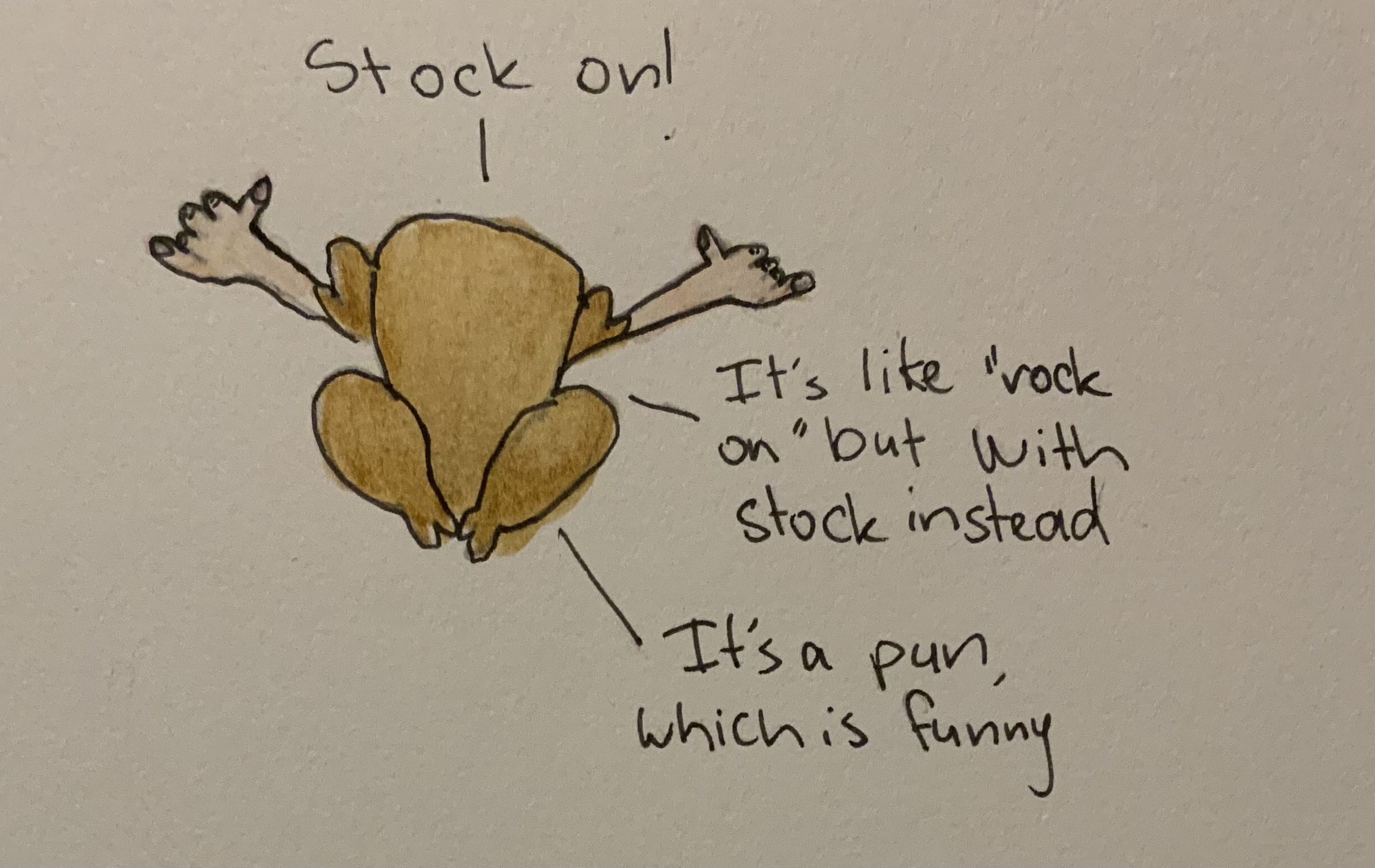
My freezer, as it turned out, contained the bones of six hot chooks, each picked semi-clean and stashed away in their foil bags in the vain hope that a time would come when I’d turn them into chicken stock.
And that time had come.
Although I’d made chicken stock before, I decided to consult a cookbook to make what I was about to do feel like a fun activity, rather than a chore. I decided to go with Samin Nosrat’s Salt, Fat, Acid, Heat because she’s very low key but her book looks very pretty propped up on my kitchen bench. And you need to have some element of glamour when you’re dealing with old chicken carcasses.
But her recipe was surprisingly specific.
It called for exactly 3.2 kilos of chicken bones but I obviously wasn’t going to stick to that – I was determined to use up those chicken bones in one fowl swoop (geddit?!).
I started off by putting the chicken bones in this big dutch oven pot (I love using this pot, especially because it gives me the chance to tell people that I splurged on it after stalking the shop for months and pouncing on it the second the store’s shutting down sale was announced). But I quickly realised that even though the chookie bones fit in the pot, they didn’t leave room for much else. So I grabbed my second biggest pot (another one I love to use because I paid NOTHING for it – some silly sausage was just giving it away!) and divvied up the bones between the two pots.
Samin’s recipe called for two onions, two celery stalks and two carrots, but given I’d not been to the shops in a while and celery is disgusting, I had to make do with what I had.
I found a bunch of frozen spring onion stalks and one red onion, so they went in.
Unfortunately the bag of brown onions in my crisper had started to sprout so I buried them in the soil of some dead pot plants in the hopes they’d grow… and to make me feel better about having let them go to waste.
The bag of carrots I had were also spouting and had a questionable slick of gunk on them, so they went into the compost bucket.
Samin also said I needed exactly 10 parsley stalks, four thyme sprigs and two bay leaves, but I had a whole bunch of fridge-dried/forgotten herbs to get rid of so I divided about two handfuls of aged parsley stalks, one fridge-dried but not smelly bunch of thyme (I consulted the internet about how long herbs keep and convinced myself this was safe) and about eight pieces of broken bay leaves into the pots.
I then filled them up with water, added a teaspoon each of black peppercorns and rock salt then brought them both up to the boil and let them simmer. Samin said to add a teaspoon of white wine vinegar because it would “help draw out nutrients and minerals from the bones into the stock” and, given we need all the nutrients we can get in These Uncertain Times, I added two teaspoons of vinegar to each pot.
Samin said to keep it at a simmer for six to eight hours, making sure it doesn’t bubble and skimming off the fat from the top to save for her Chicken Confit recipe.
However, having reached the simmer stage and documented my stock adventures up to this point, I’ve just been hit with a realisation that I don’t have much in the way of containers to store all this stock in.
I do, however, have a few wine bottles I could empty to then fill up with stock* and about six to eight hours to kill…
* Do not, I repeat, DO NOT fill empty wine bottles with stock and then freeze them. I mean, maaaaybe you could get away with half-filling them, which I’d done before, but I don’t think it’s worth the risk. I open my freezer to find a glass explosion and brown slushy ice and had to chuck the whole thing out. It was terribly sad and I don’t want you to have to go through that.

 Just a Thought