Originally published by The Clifton Courier, January 19, 2022
One of the best things that happened to me last year* was when I bought myself a second-hand barbecue.
* Because of the passage of time, this reference to “last year” is actually a reference to 2021.
There’s something so satisfying about buying second hand.
Obviously there’s the environmental element to it, in that you know you’re not responsible for fuelling the capitalism machine and contributing to landfill by buying brand new gear.
But the real kick is being able to brag to people about how good of a deal you got. And I got a great deal with this second-hand barbecue. So I make a point of barbecuing pretty much any time I have someone over for dinner so I can find a way to work how much I paid for the barbecue, the cover, the stand, the brand new gas bottle, the scrubbing brush and the spare plate* into the conversation. I’m extremely subtle about it, as you can imagine.
* Which I’ve yet to actually use… even after all this time.

But while I do love a good brag about the cheapness of my second-hand goods (I got my desk for just 15 bucks from the Armidale dump!) I do also just love how much more delicious everything becomes after being cooked on a barbecue. Even the cheapest, scummiest cut of meat sings after being slapped onto that hallowed (and slightly crusty) cast iron hotplate.
Corn. Tomatoes. Asparagus. They’re all fine vegetables on their own (well, pedants would point out that tomato is a fruit but I would tell those pedants to pipe down, because we’ve got more pressing issues to discuss) but drizzle them with a bit of olive oil, dust them in a grind of salt and pepper and bung them on the barbecue for a few minutes and you’ve got yourself a main meal – not a some limp side dish.
But look at me, I’m rambling. How unusual. Let me get to the meat rub.
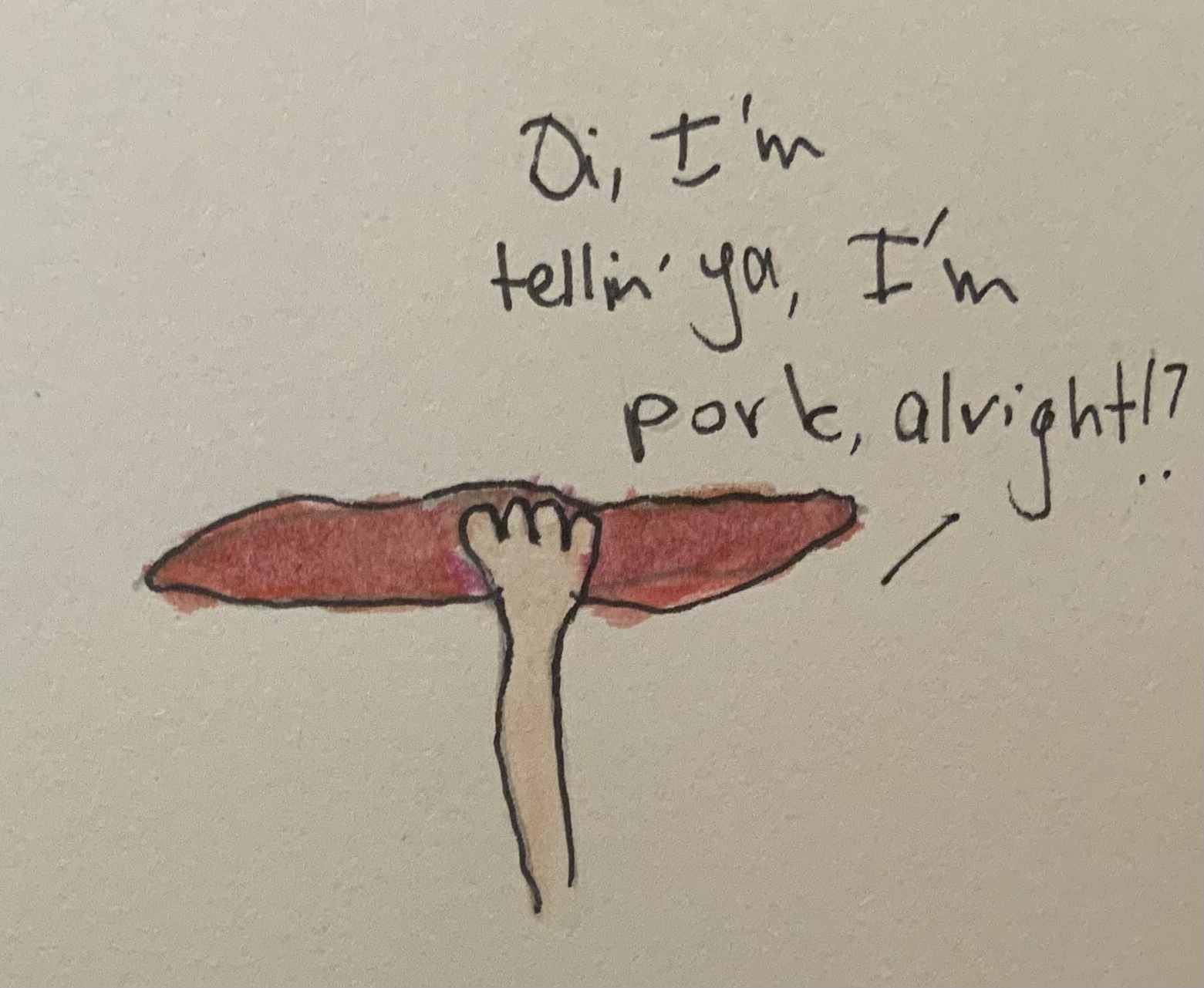
For this recipe, I usually like to go one big hunk of meat instead of individual portions. Sometimes I’ll go a big thick rump steak from my local butcher and sometimes I’ll opt for the comically long pork fillets my local grocer does (it looks like a skinned wallaby tail, but the label assures me it came from oinker).
I came up with this rub after bastardising a mushroom shish kebab recipe I attempted for my veggo friend. And while I usually only bastardise recipes by adding stuff to them (that’s still the case here) I also omitted a few things… because while I’m happy to break out the mortar and pestle, I’m not willing to pound for as long as cinnamon quills and cardamom pods need to be pounded for. I’m a busy career woman!
Here’s what I do:
Step one: Warm about two teaspoons each of cumin seeds, fennel seeds and fenugreek in a dry frypan over a low to moderate heat for about two or three minutes. You want them to be warmed enough to darken slightly and punch you in the nostrils with their aroma – don’t stray too far from the hotplate while this is happening, you really don’t want the stink of burnt spices in the kitchen.
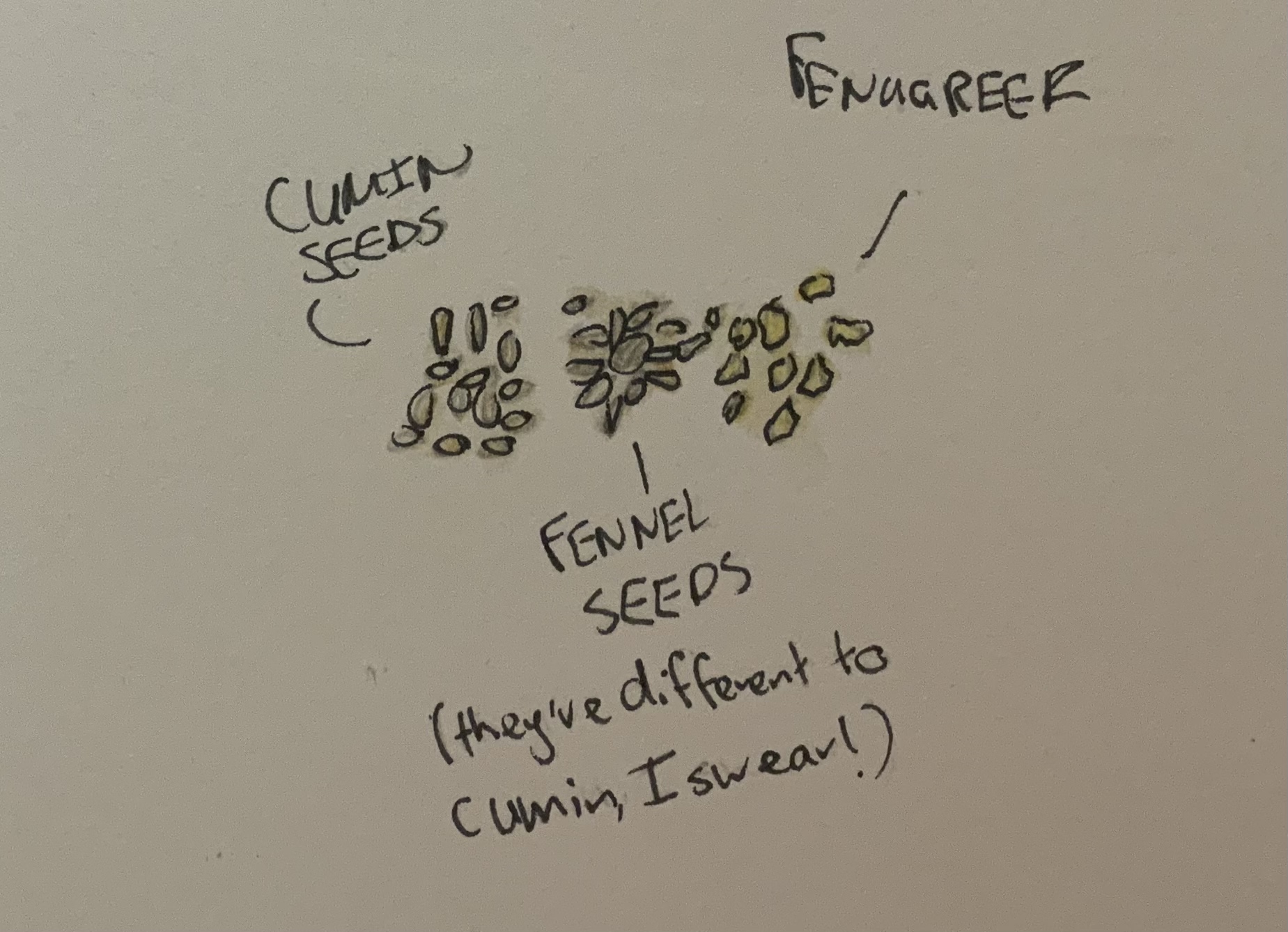
Step two: Tip this into mortar (yes, I had to Google which part was which and, no, I won’t retain that information after today so will have to look it up again and again) with about two teaspoons of course sea salt and crush everything to dust with your pestle.
Step three: Then add two cloves of garlic to the mortar and smack it silly – you should end up with a bit of a paste.
Step four: Then, scrape it into a shallow baking dish big enough to fit your meat hunk and mix in about two tablespoons of olive oil, a squeeze of half a lemon, another teaspoon or two of salt and stir with a fork.
Step five: Coat the meat in this mixture and let it marinate in the fridge until about two hours (give or take, depending on how hot the day is) before you’re about to cook so it’ll come to room temperature.
Step six: Whack that sludgy meat on a searing hotplate, cook for just a few minutes on each side, then triumphantly bring it back into the house.
Step seven: Let it rest for at least 10 minutes, so the juices get reabsorbed but, let’s be honest, a big part of this is being able to make a spectacle of the meat to your guests who will probably let out refrains such as “look at that” and “geez, that’s a piece of meat” and “you truly are the king of kings”.
Step eight: Then slice the meat into 5mm to 1cm slices, perfect for chucking into tortillas, artfully draping over a puree of some kind or just picking at the dead animal like rabid cavemen.
 Just a Thought