What is the best way to communicate genuine laughter?
I mean, obviously I’m talking in a text-based scenario. Because, clearly, the act of laughing would be the best way to express your amusement in a face-to-face conversation.
But when you’re in a back-and-fourth text exchange, you can let out a belly laugh but the other person won’t hear it. If you want someone to know that you genuinely found their last remark amusing, you have to literally spell it out. But spelling it out is tricky.
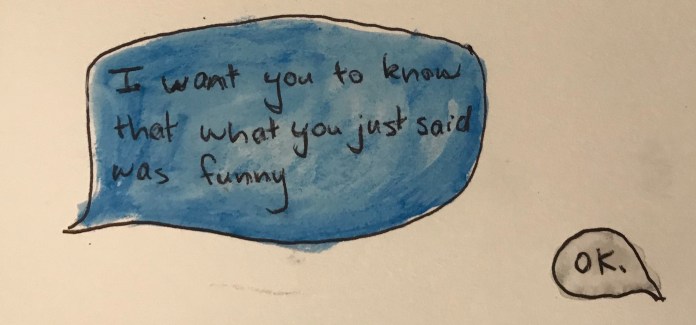
The first option is the standard “haha”. It’s what most people would interpret as laughter, even though it doesn’t really reflect any living human person’s actual laughing style. It is, I would say, the generic depiction of laughter across all English-speaking countries. And that’s all well and good, but because it’s so widely-used, it doesn’t come off as all that authentic. It’s kind of like when you were one MSN back in the day and typing “LOL” even though you were silently staring at the computer screen with a straight face – because, even if you did have to try to be quiet so as to not wake up your parents with your rollicking laughter, most of the time the other person’s banter did generate an actual laugh out loud response.
So what about a “hahaha”? I mean, that’s one extra “ha” and it’s different to the standard “haha”, so it seems to have more weight to it. But, then, I feel like adding extra “ha”s on to a “haha” then creates some kind of hierarchy of laughter. Like, it’s as if you have a scale for your level of amusement and, having assessed the humour of the previous remark against it, came to the conclusion that it deserved one extra “ha”. Whereas other jokes might get a “hahahaha” – that’s two extra “ha”s – because your analysis of the joke generated a higher laughter score. And, look, that might be good at communicating the humour of the joke but, again, it doesn’t have the authenticity of a good laugh.
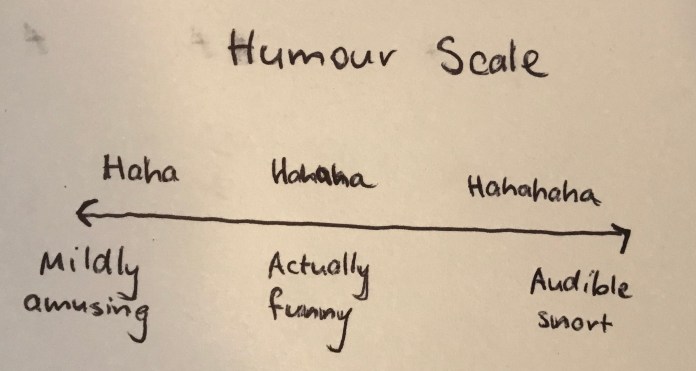
Because it’s kind of saying “after careful consideration I’ve scored that joke and determined that it warrants X number of ‘ha’s, well done”. So it’s like you’re almost grading the person instead of simply responding with amusement. You’ve had to stop, think and then type out your laughter accordingly and it’s highly likely you’ve looked at the number of “ha”s you’ve written and edited it according to your initial humour assessment. This makes it pretty contrived, when genuine laughter is typically an involuntary response.
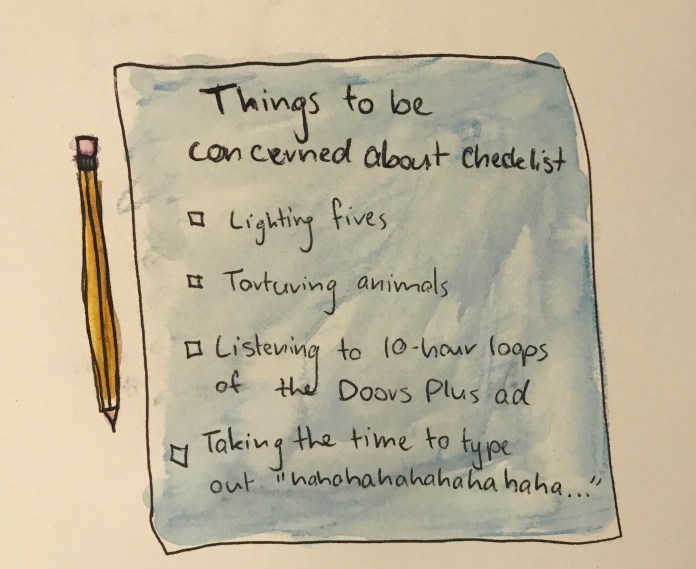
And, at the same time, you have to wonder how many “ha”s are too many. Like, where do you draw the line between laughter and straight up mocking? Because if you see a hahahahahahahahahahahahahahahahahaha, it goes beyond laughter and ventures into something more menacing. I mean, who spends that much time typing that out? Who in their right mind would do that? Excessive use of the “ha” conveys something else entirely.
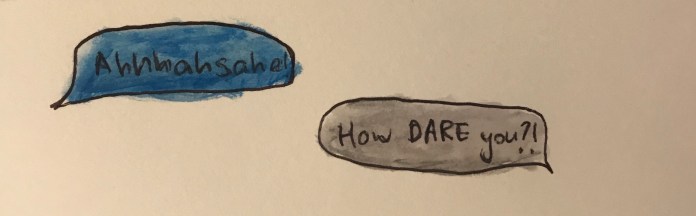
So should you then just chuck down a splutter of letters, messily assembled to convey your amusement? Something like “ahshahha”? Surely that looks more genuine, right? I mean, I kind of think so but then, I just wrote that while lying silently in my cold bedroom, nursing a headache with what I can only assume is a dumb, blank look on my face. I wasn’t laughing at all, but it kind of looks like I was. And this might be worse than the “ha” scoring system I talked about above, because the random smattering of “ha”-like letters is entirely false. You could argue the doubling up of an “h” and the addition of the “s”, which is close to the “a” on the keyboard, was an unintentional consequence of my feverish typing which I was unable to control due to my uncontrollable laughter, but it wasn’t. I added the typos in to make the laughter look more genuine. And this deception actually makes it feel more fraudulent to me. That’s not laughter, that’s a betrayal of trust.
So what do you do you when you genuinely find something amusing and you want the other person to know that?
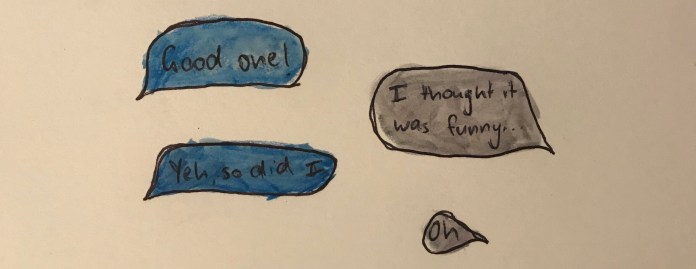
Sometimes I’ll chuck out a “hah”, which by its very nature is quite contrived. I mean, think of the last time someone let out a “hah” in conversation, without any follow up laughter – I’m wiling to bet it was a deliberately engineered response, used to convey something mixed in with the laughter, like disapproval or a hint of disdain. Other times I’ll say “that was a good one” but there’s the risk of it being misinterpreted as sarcasm because the phrase “good one” is so frequently used in movies and shows to show that a character does not actually think the “one” in question was good at all. I’ve also seen some people go with a “that was funny”, but there’s still a lot of misinterpretation that could go on there. You could also like the comment – like, on Instagram, it puts a little heart on the speech bubble – but then, what does that say about the other messages you haven’t liked?
I hoped I’d get to the end of this with a resolution, but I actually don’t know the answers to this one. The best I can come up with is that it’s a case-by-case kind of thing – which means you have to adjust your expressions of amusement according to the context and tailor your response for each individual person like you’re actually engaged in the conversation with them or something. Or should you describe what your bodily response to the joke was? Like, “I actually just literally laughed out loud”? Or maybe a “I just snorted”? Or a “I actually just peed my knickers and now I’ve been sent home from work”? If you have the answers, please respond with your preferred authentic but contrived combination of letters that you use to express your level of amusement.
 Just a Thought